How to Remove Stains From Marble Floors in Singapore Without Causing Damage
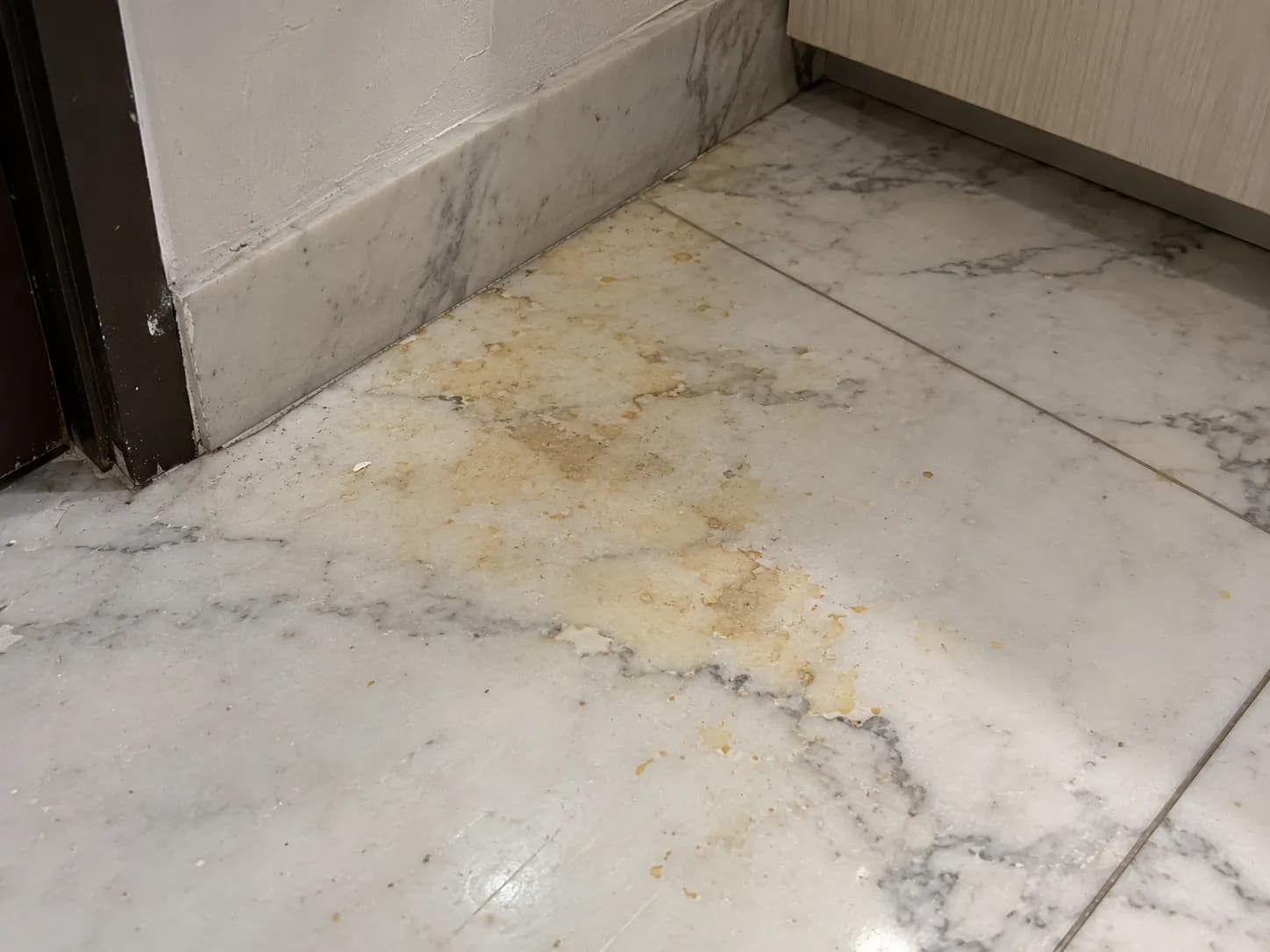
How to Remove Stains From Marble Floors in Singapore Without Making It Worse
Marble is a porous natural stone, and in Singapore's warm, humid climate, spills and moisture find their way into the surface faster than most homeowners expect. A red wine spill at a dinner party, a leaking flower pot or a rusty chair leg can all leave marks that ordinary mopping will not shift.
The good news is that most marble stains can be removed. The bad news is that the wrong home remedy can permanently etch the stone and turn a simple stain into an expensive restoration job.
First, Understand Why Marble Stains
There are three distinct types of marble damage, and confusing them is the most common mistake:
Staining. A substance soaks into the pores and discolours the stone from within.
Etching. An acid chemically eats the surface, leaving a dull white or grey mark.
Surface soiling. Dirt, grease or residue sitting on top of the sealer.
Stains need poultice treatment. Etching needs mechanical polishing. Surface soiling just needs proper cleaning. Treating an etch as a stain, or vice versa, wastes time and can worsen the damage.
Identify the Type of Stain
Stain Type | Common Cause | Typical Appearance | Treatment Approach |
|---|---|---|---|
Oil-based | Cooking oil, lotion, grease | Dark, soft-edged patch | Poultice with absorbent powder |
Organic | Wine, coffee, tea, juice | Brown or pink tint | Hydrogen peroxide poultice |
Rust | Metal furniture, flower pots | Orange or brown ring | Specialised rust poultice |
Water | Trapped moisture | Cloudy white haze | Drying plus polishing |
Etch mark | Vinegar, citrus, acidic cleaners | Dull white ring or spot | Professional polishing only |
Safe Home Methods
1. Start With a pH-Neutral Cleaner
Before assuming the worst, clean the area with a pH-neutral stone cleaner and a soft microfiber cloth. Many marks are simply surface residue that lifts easily.
2. Use a Poultice for Deep Stains
A poultice draws the stain out of the stone. Apply an absorbent powder mixed with the appropriate liquid, cover with plastic film, tape the edges and leave it for 24 to 48 hours. Remove slowly and allow the area to dry completely.
3. Blot, Never Scrub
Aggressive scrubbing pushes stains deeper and dulls the polish. Always blot with a clean cloth, working from the outside of the stain inward.
4. Dry the Area Thoroughly
Moisture left on marble causes cloudiness and can encourage mould in grout lines. After any treatment, dry the surface with a clean towel and keep the area ventilated.
What Never to Use on Marble
Vinegar, lemon juice or any acidic cleaner.
Bleach and chlorine-based products.
Abrasive scouring powders and steel wool.
General-purpose floor cleaners not formulated for natural stone.
Steam mops, which force moisture into pores and grout lines.
These may appear to work in the short term but will dull the finish and create etch marks that only mechanical polishing can fix.
When a Stain Needs Professional Polishing
Call a stone specialist when:
The mark does not respond to a poultice after 48 hours.
The surface feels rough or chalky, indicating etching rather than staining.
There are multiple marks across a large area.
The marble has lost its shine overall, not just in one spot.
The floor is in a bathroom, kitchen or other wet area where moisture may be trapped.
Professional polishing removes a microscopic layer of stone, restoring both colour and gloss. It is the only permanent solution for etching.
Preventing Future Stains
Reseal marble every 12 to 18 months in humid Singapore conditions.
Wipe spills immediately, especially wine, coffee and sauces.
Place felt pads and coasters under furniture and planters.
Use trays under potted plants to catch drainage.
Keep a pH-neutral stone cleaner on hand for quick cleanups.
Avoid walking on marble with wet, dirty shoes.
Frequently Asked Questions
Can white vinegar remove marble stains?
No. Vinegar is acidic and will etch marble, creating a dull mark that requires polishing to remove. Use a pH-neutral cleaner instead.
How long does a poultice take?
Most stains lift within 24 to 48 hours. Old or deep stains may require two applications.
Will baking soda damage marble?
Baking soda is mildly alkaline and generally safe in a poultice, but it should not be scrubbed into polished marble as an abrasive.
Can etching be cleaned away?
No. Etching is physical damage to the surface, not a stain. It must be polished out mechanically.
Need Help With a Stubborn Marble Stain?
Asrafi Renovation Pte Ltd treats stains, etches and scratches on marble, granite and homogeneous floors across Singapore, followed by polishing and sealing to restore an even finish.
Call or WhatsApp +65 8464 2371 or visit 101 KITCHENER ROAD, #03-04A, JALAN BESAR PLAZA, SINGAPORE 208511. Open daily, 9am to 10pm.
Found this helpful? Share it.